A Stronger Niger Delta Starts with Decentralised Pipeline Surveillance and a Path to Over 2mbpd Crude Production
- by Ebikeme, Bayelsa, HSN
- about 4 months ago
- 509 views
When power is concentrated in the hands of one individual, there is a risk that it may be used to advance personal interests rather than the public good. If events do not go their way, they may use their influence to challenge institutions or government processes. Such concentration of power can weaken accountability and threaten stability.
Decentralising power across institutions and leaders helps prevent abuse, strengthens accountability, and promotes transparency. A system of checks and balances ensures that no single individual can dominate decision-making. As the saying goes, “Power shared protects democracy.”
The Warri Ward delineation is a case study of how Tompolo’s Tantita Security almost used the funds it received from the pipeline surveillance contract, along with its influence in the region, to disrupt Nigeria’s oil production and force things to go its way. However, those plans were quickly exposed to the public, and they were unable to carry them out.
Today, the pipeline surveillance contract that was controlled by a few individuals, and there is concern that there has been little or no improvement in crude oil production. Since the contract was awarded, Nigeria’s crude oil production has barely reached 1.5 million barrels per day (mbpd), and these figures continue to fall short of the OPEC benchmark.
Our production just managed to reach 1.53 mbpd in the month of May 2026 because we have constantly put the searchlight on their criminality.
The reasons for the shortfall in crude oil production are very clear. The same centralised contractors are responsible for the shortfall. They collaborate with organised cartels involved in crude oil theft and move large quantities of stolen crude into mother vessels, which are then shipped into international waters.
An example of such a vessel is the Thomarose vessel, controlled by a Nigerian company, which was seized by the U.S. Navy in Venezuelan international waters.
That vessel is linked to one of the monopolised pipeline contractors, yet NIMASA and NNPCL did not carry out a thorough investigation into the Thomarose vessel, despite concerns about vested interests within those institutions connected to the movement of stolen crude from Nigeria into international waters.
This monopolised contract is also said to damage crude oil pipelines in the very regions it is meant to protect. It is now widely reported that the operational strategy adopted by Tantita Security involves deploying personnel to areas of interest.
In this process, pipelines are allegedly vandalised, documented with photos and videos, and then reported to authorities, where they present themselves as the only solution to problems they intentionally created for financial gain.
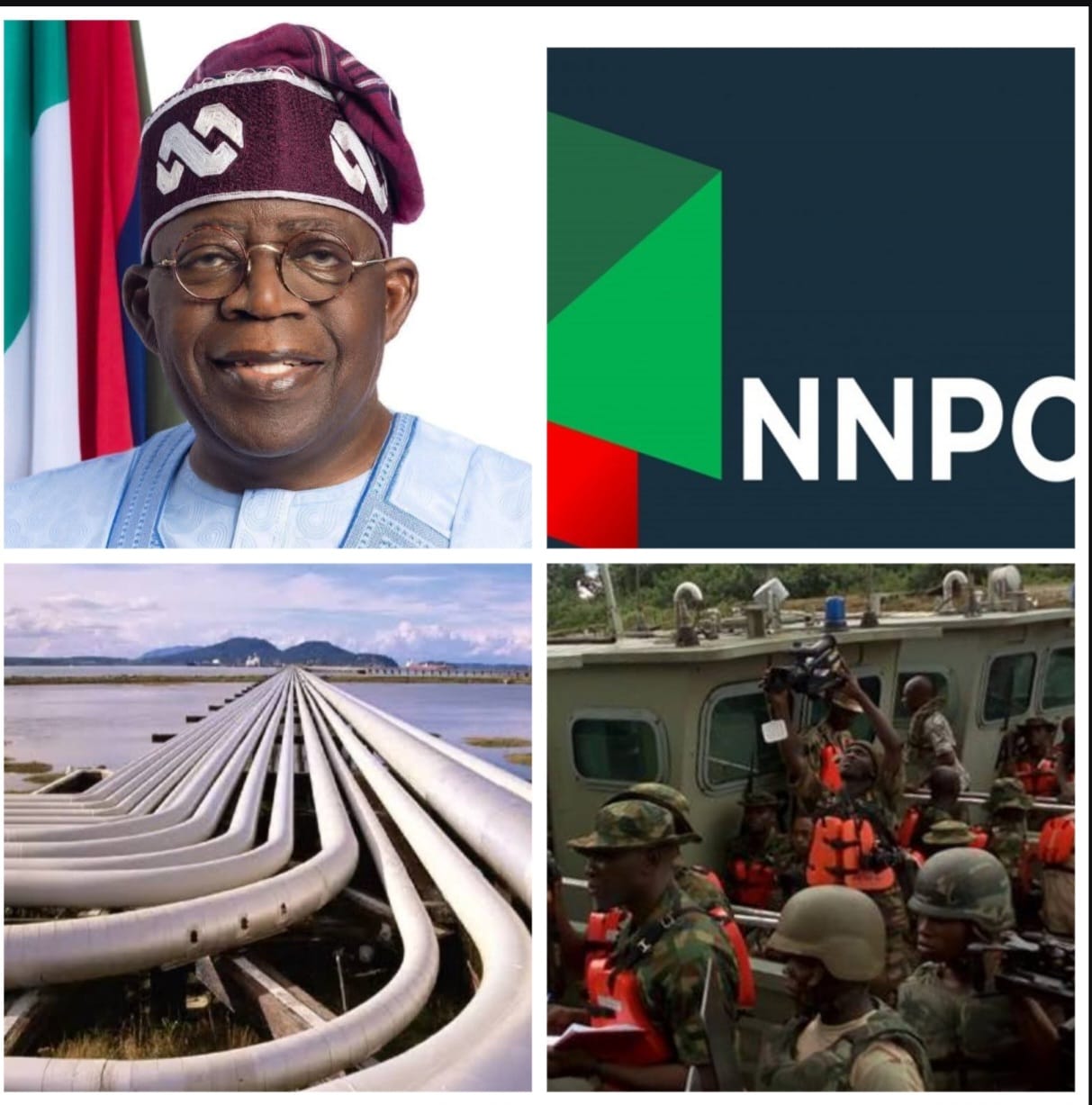
So any government officials or appointees advising President Bola Ahmed Tinubu against decentralising the pipeline surveillance contract across Niger Delta states, allowing state-based stakeholders and host communities to manage their areas, should be viewed as acting against the progress of the nation.
President Bola Tinubu should decentralise the pipeline surveillance contract across Niger Delta states so that state-based stakeholders and host communities can manage it for proper accountability.This will boost crude oil production above 2 million barrels per day and ensure inclusiveness, fairness, and national security in the Niger Delta region.










0 Comment(s)